Beyond The Body
  • Home
  • About
  • Contributors
  • Contact

Managing Challenging Behaviors in Dementia without Drugs

1/24/2015

1 Comment

 
Picture
As a follow-up to last week's blog post about the increasing use of antipsychotics to manage behavioural and psychological symptoms of dementia (BPSD) in long-term care facilities, this week's post highlight's one nursing home's efforts to counteract this trend. Pathstone Living, a nursing home in Mannkato, Minnesota, has successfully altered their approach to managing BPSD from pharmacological to behavioural and environmental interventions. "A few years ago, antipsychotics were used frequently at Pathstone. 'We saw these as medications that were supposed to help the patient and, of course, we gave them to them with the feeling that we were doing good', says Shelley Matthes, a registered nurse who is head of quality assurance for the nonprofit Ecumen, which runs Pathstone and about a dozen other nursing facilities in Minnesota. Our goal, says Matthes, was to reduce our antipsychotic use by 20 percent. And in the first year we reduced it by 97 percent".

To read more about how this facility successfully reduced the need for antipsychotic medications, visit
http://www.npr.org/blogs/health/2014/12/09/368539057/this-nursing-home-calms-troubling-behavior-without-risky-drugs.



1 Comment

Personalized Treatment For Intellectual Disability Developed

1/23/2015

1 Comment

 
Researchers have created a new approach that focuses on treating the effects of mutations to a gene known as Syngap1. Animals models show that mutations in Syngap1 reduce the number of functional proteins are responsible for the causes of sporadic intellectual disability and are associated with schizophrenia and autism spectrum disorder.

 “Our hope is that these studies will eventually lead to a therapy specifically designed for patients with psychiatric disorders caused by damaging Syngap1 mutations,” said Gavin Rumbaugh, associate professor at The Scripps Research Institute who led the study.

Sporadic intellectual disability affects approximately one percent of the worldwide population, suggesting that tens of thousands of individuals with intellectual disability may carry damaging Syngap1 mutations without knowing it.


http://www.science20.com/news_articles/personalized_treatment_for_intellectual_disability_developed-152544


1 Comment

#CHHSletstalk

1/22/2015

1 Comment

 
Picture
High school student Brett Rothery from Calgary, Alberta recently launched a social media campaign to raise money and awareness for the Calgary chapter of the Canadian Mental Health Association. While the campaign started local, it quickly went viral as word of Brett's fantastic initiative traveled fast all over the globe ...

Brett’s goal was initially to raise $500 when he challenged his Crescent Heights High School to donate five cents to mental health initiatives for every tweet that included the hashtag #CHHSLetsTalk.

"The campaign hit that limit within nine hours and the hashtag began trending nationally. One week later, the hashtag has been retweeted more than 100,000 times by people all over the world. Donations started pouring in and local companies began to take notice, pledging more money towards the project."

The #CHHSletstalk initiative will continue to run until January 28th, so there is still plenty of time to tweet your support for Brett, join him in the fight against mental health stigma, and help raise money for much-needed mental health services and supports!

"It's just been inspiring to see so many people sharing their stories and trying to raise awareness with us''- Brett Rothery

1 Comment

Glia: Slowly Piecing Together the Puzzle of Mood Disorders

1/20/2015

1 Comment

 
Neurons are the cells of the brain: the average human brain contains, on average, 86 billion of them, and their untold billions of interconnections are largely what we credit for the development of human consciousness. Unfortunately, there is a problem. The neural model of the brain, holding that neurons and their interconnections are responsible for all of our moods and behaviours, has yet to explain how mood disorders arise and are sustained. Treatments based on the neural model, like selective serotonin reuptake inhibitors as a treatment for depression, are not neuron-specific and have only limited effectiveness in mild and very serious depression. They also have serious side-effects. 

Glia were long considered to be the support structure of the brain, outnumbering neurons by approximately 10 to 1. In the heady rush to map and categorize neural networks, glia were frequently regulated to the position of scaffolding in our conceptualization of the brain, the chassis to the brain's engine. 

Research has shown that our conceptualization of glia is in need of revision. There are many subtypes of glia that fulfill vital functions in the brain, including some that may facilitate communication in previously-unknown ways in the brain. As Dr. Fikrey Birey, post-doc at Stanford University, explains below, new studies are slowly demonstrating a strong correlation between the newly-discovered NG2-subtype of glia and mood disorders. 

Find additional research on the subject here.
1 Comment

Psych In The News - Week 47

1/18/2015

1 Comment

 
Picture
Catch up up on  all the news related to psychiatry and mental health from last week! 


Read More
1 Comment

Antipsychotic Use in the Elderly

1/17/2015

1 Comment

 
Picture
National headlines in recent years have highlighted the staggering rates in which antipsychotics are prescribed to frail elderly living in long-term care facilities for the management of challenging behaviours, such as agitation and aggression, even though these drugs are not approved for use in such circumstances and have been associated with increased risk of death in this population. The results of a new study published in JAMA this month indicate that atypical antipsychotics can further harm elderly by increasing their risk of falls and fractures. "Adults ages 65 and older who received a new prescription [for an atypical antipsychotic] had a 53% increased risk of falling and a 50% increased risk of non vertebral osteoporotic fracture. These findings call into question the widespread off-label use of atypical antipsychotic medications and support increasing evidence of safety concerns regarding their use in older adults". 
To read more about the research findings, visit http://www.medpagetoday.com/Neurology/GeneralNeurology/49529


1 Comment

Alkermes stock surges after schizophrenia drug shows effectiveness without weight gain

1/16/2015

1 Comment

 
Picture

Biopharmaceutical firm Alkermes has shown that its new schizophrenia drug, ALKS 3831 has been effective and resulted in lower weight gain. The 300-patient study showed those who had taken ALKS 3831, a mixture of samidorphan and established antipsychotic drug olanzapine, saw a 37 percent lower weight gain, compared to those taking olanzapine alone.

The recent data suggests that ALKS 3831 has the potential to be a meaningful new treatment option for patients suffering with schizophrenia. ALKS 3831 is designed to offer the efficacy benefits of olanzapine while attenuating the significant weight gain frequently associated with its use.

http://www.bizjournals.com/boston/blog/bioflash/2015/01/alkermes-schizophrenia-drug-effective-without-the.html?page=all


1 Comment

Think Like A Psychiatrist - Visual Hallucinations in the Elderly

1/15/2015

1 Comment

 
Picture
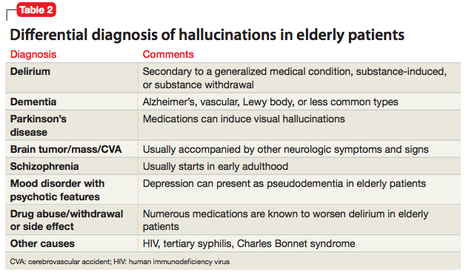
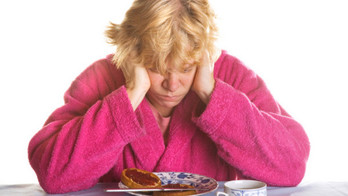
Put your knowledge and skills to the test with the case of an 82 year old woman who presents to the ED as she has become agitated by new vivid visual hallucinations.  The patient has become quite frightened by these visions and has started carrying a knife for protection.  Delirium, dementia and medication effects are all ruled out as potential causes.

Her medical history is significant for vision loss secondary to macular degeneration and diabetic retinopathy, as well as diabetes, hypothyroidism, and a herniated disc. 
In terms of her mental health she reports feeling anxious and experiencing a sleep disturbance due to her fears.  She also reports feeling sad and worthless as she cannot hear or see as well when she was younger. 

Can you come up with a diagnosis or treatment plan?

"Terrifying Visions" by Abdulmalek Sadehh, Veena Bhanot, and Cristian Sirbu (Current Psychiatry)

1 Comment

How Mental Illness Affects Relationships

1/14/2015

1 Comment

 
Picture
In the powerful article, "My Lovely Wife In The Psych Ward", Mark Lukach shares his wife's struggles with depression and psychosis and discusses how mental illness can affect relationships ...

"But even during our best moments as husband and wife, father and mother, we can feel lingering traces of our roles as caretaker and patient. Psychiatric crises are episodic, but they cut deep into relationships and the lacerations take years to mend. When Giulia was sick, I acted for her in what I believed was her best interest, because I loved her and she wasn’t capable of making decisions for herself ...

And now, if I suggest that she to go to bed, she complains that I’m telling her what to do, micromanaging her life. Which makes sense, because I did tell her what to do and micromanaged her life for months at a time. Meanwhile, I’m quick to gripe that she’s not taking care of herself well enough. This dynamic isn’t unique to us—it exists in countless other families who lived through a psychiatric crisis. The onetime caregiver continues to worry. The former (and perhaps future) patient feels trapped by paternalistic patterns."

1 Comment

Depression and Obesity

1/13/2015

1 Comment

 
Picture
Despite its name, atypical depression is very common subtype of Major Depressive Disorder. It is differentiated from melancholic or other forms of Depressive disorders by its reactivity: if something good happens to you, you'll feel good for a while. If something bad happens, your mood will plummet. In addition, atypical depression sufferers typically experience oversleeping (called hypersomnia), increased appetite or weight gain, the feeling of being weighed down or paralyzed, and an intense reaction to rejection. 

As if that weren't enough, a new study from the Lausanne University Hospital in Switzerland has found atypical depression sufferers to be at higher risk of increased obesity, increased waist circumference in both sexes, and fat mass in men over time, even as compared to sufferers of other variants of depressive disorder. 

"This emphasizes the need to identify individuals with this subtype of MDD in both clinical and research settings", the authors write. "Therapeutic measures to diminish the consequences of increased appetite during depressive episodes with atypical features are advocated."

1 Comment
<<Previous
Forward>>

    Description

    Supporting and enhancing students' and health professionals' knowledge and understanding of mental health and psychiatry

    Archives

    June 2017
    May 2017
    April 2017
    March 2017
    February 2017
    January 2017
    December 2016
    November 2016
    October 2016
    September 2016
    August 2016
    July 2016
    May 2016
    April 2016
    March 2016
    February 2016
    January 2016
    December 2015
    November 2015
    October 2015
    September 2015
    August 2015
    July 2015
    June 2015
    May 2015
    April 2015
    March 2015
    February 2015
    January 2015
    December 2014
    November 2014
    October 2014
    September 2014
    August 2014
    July 2014
    June 2014
    May 2014
    April 2014
    March 2014
    February 2014
    January 2014

    Categories

    All
    Aboriginal Mental Health
    Abuse
    Addiction
    ADHD
    Advocacy
    Agitation
    Alcohol
    Alcohol Withdrawal
    All
    Alzheimer's Disease
    Animals
    Antipsychotic
    Anxiety
    App
    Art
    Autism Spectrum
    Awareness
    Barriers To Care
    Bereavement
    BIID
    Bipolar
    Books
    Borderline
    BPSD
    Caregivers
    Catatonia
    CBT
    Child Psychiatry
    Complicated Grief
    Concussion
    CPA
    Cultural Psychiatry
    Delirium
    Dementia
    Depression
    Dermatillomania
    Diagnosis
    Documentary
    DSM 5
    Dual Diagnosis
    Eating Disorders
    ECT
    Education
    Educational Resource
    Epilepsy
    Ethics
    Exercise
    Factitious Disorder
    Film
    Food
    Forensic Psychiatry
    Gambling
    Gaming Addiction
    Gender Dysphoria
    Geriatric Psychiatry
    Global Mental Health
    Harm Reduction
    Heart Attack
    Hoarding Disorder
    Humanities
    Infographic
    Initiatives
    IPad
    Language
    Law
    LGBTQ
    Loneliness
    Malingering
    Mania
    Medication
    Meditation
    Mens Mental Health
    Mental Health
    Mental Health Law
    Mental Status Exam
    Military
    Mind-body Wellness
    Mindfulness
    Mood Disorder
    Music
    Neurodevelopmental
    Neuropsychiatry
    News
    Ocd
    Panic Disorder
    Parksinson's Disease
    Patient Perspective
    PDD
    Personality Disorders
    Phobia
    Physical Health
    Physician Suicide
    Physician Wellness
    Poems
    Pop Culture
    Postpartum
    PPD
    Prevention
    Psych Assessment
    Psychiatry
    Psychoanalysis
    Psychosis
    Psychotherapy
    Ptsd
    Recovery
    Refugee Mental Health
    Relationships
    Reproductive Mental Health
    Research
    Resiliency
    Safety
    Schizoaffective Disorder
    Schizophrenia
    Screening
    Seasonal-affective-disorder
    Selective Mutism
    Self Harm
    Self-harm
    Ses
    Sexual Disorders
    Sleep Disorder
    Social Anxiety
    Social Isolation
    Social Media
    Somatic Symptoms And Disorders
    Sports
    Stigma
    Stress
    Stress Injury
    Student Mental Health
    Substance Use
    Suicide
    Surgery
    Technology
    TED
    Therapy
    Tools
    Transgender Mental Health
    Treatment
    Trichotillomania
    Womens Mental Health
    Youth

    RSS Feed

Powered by Create your own unique website with customizable templates.