Beyond The Body
  • Home
  • About
  • Contributors
  • Contact

High Rates of Depression Among Resident Physicians

12/8/2015

1 Comment

 
Picture
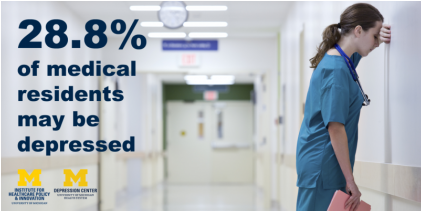
Recently, JAMA, Journal of the American Medical Association published a systemic review and meta-analysis that investigated the prevalence of ‪‎depression‬ among medical residents. The results which were based on over 50 studies and involved 17,000 residents from around the world found that upwards of 1/3 of residents experienced symptoms of depression, a rate that is markedly higher than the general population.

While some still point to the persistent ‪stigma‬ of ‪‎mental illness‬ among medical professionals, as well as the culture of ‪medicine‬ which includes high ‪‎stress‬, busy schedules and sleep deprivation as contributing factors to becoming overwhelmed and depressed, Dr. Ajantha Jayabarathan from Halifax suggests part of the problem may also be rooted in the exposure to trauma many physicians face, as well as a lack of supports to discuss ‪‎mental health‬ challenges, and difficulties and stressors encountered at work.

""As a result of being exposed to this ‪trauma‬ vicariously over and over again, it actually impacts on the world view of the practitioner themselves," Jayabarathan said. "As a result of it, they end up losing the very ‪‎empathy‬ and compassion that attracted us to that field in the first place."

Jayabarathan recognized how time-pressed residents when they need to learn skills quickly. But she called it unconscionable to leave residents to face storms without protection, such as supports known as Balint groups where doctors can debrief regularly to prevent burnout."

For the full story, click here:
http://www.cbc.ca/news/health/depression-residents-1.3355358
https://jama.jamanetwork.com/article.aspx?articleid=2474424


1 Comment

Another Suicide Highlights Growing Issue of Physician Mental Health 

11/24/2015

1 Comment

 
Picture
Last week, tragically, a 27-year-old internal medicine resident at the University of Montreal died by ‪suicide‬. While this young and promising new physician was not the first doctor to die by suicide, her loss reminds us of the persistent issue of ‪mental illness‬, as well as the high pressures, ‪stress‬, and burnout that face those entering the medical profession.

While we have become aware that 1 in 7 ‪medical students‬ have contemplated #suicide and that "we lose at least one medical school worth of MDs per year to suicide", little has been done to address the persistent ‪stigma‬ of mental illness among healthcare professionals, or the culture of ‪medicine‬ that tends to perpetuate burnout and ‪depression‬.

As this powerful article by Andre Picard emphasizes, it is time to now transcend from increasing awareness to focusing on actually taking action and addressing and preventing ‪mental health‬ issues among our medical students, residents, and physicians, as suicide and mental illness should not be an occupational hazard of the field.

"In short, medical education is too often imbued with a macho attitude that learners have to be broken down and toughened up and that those who can’t take it are weak and unworthy.

Perversely, many physicians take pride in this boot-camp mentality. When efforts were made to eliminate the insane 100-hour workweeks of residents, old-timers quietly (and sometimes not so quietly) dismissed the younger generation as wimps...

In fact, what’s different today is not that young people are weaker, it is that expectations are so much higher and isolation is so much greater, in spite of (or perhaps because of) so-called social media. Medical students and residents are also headed into a world of uncertainty, not one where they are guaranteed a life of privilege."


For the full article, click here: http://www.theglobeandmail.com/globe-debate/suicide-should-not-be-an-occupational-hazard-for-doctors/article27444903/

1 Comment

Medical Student Mental Health: Peer to Peer Forums

11/11/2015

1 Comment

 
Picture
While there are no official studies detailing the precise number of ‪med students‬ with ‪mental health‬ issues in Canada, data from elsewhere around the world suggests that the rate of ‪‎depression‬ among medical students can reach as high as 20% or 1 in 5. Though each university offers wellness services for their students, University of Western Ontario is the first to hold peer-to-peer forums where medical students come together to discuss ‪stress‬ and their personal mental health experiences including eating disorders, suicidal ideation, self-harm, depression and ‪anxiety‬.

The idea behind such peer forums are to help overcome the stigma of seeking help, for students to understand that they are not alone with regards to burn-out and mental illness, and to provide support, hope, and encouragement to one another.
"Chitpin estimates that at least half of the students who attended the forum have, or have had, mental health struggles.

In interviews, Chitpin, Sauvé and other students stated that they have to feel safe talking about what's going on inside their minds. They said they become more comfortable discussing their problems when they hear classmates share their personal mental health experiences. Having one or two trusted friends or classmates can often provide vital support."

Read the full story here:
http://www.cmaj.ca/site/earlyreleases/10nov15_medical-students-talk-openly-about-their-mental-cmaj.109-5151.xhtml


1 Comment

Is Our Culture of Medical Education Leading to Burnout of Medical Students and Doctors?

9/8/2015

1 Comment

 
Picture
Recently on KevinMD.com, Yan Yu, a family medicine resident and Rhodes scholar from Calgary, Alberta wrote a very interesting article regarding burnout in the medical profession, and how the current culture of medical education and training may be one of the underlying culprits. More especially, using his own experiences from his med school days (which may sound all too familiar to those in the midst of clerkship), Yu explains how for many the stress and mental/physical exhaustion begins as early as medical school.

It is believed that anywhere from 45-71% of med students are affected by burnout, which is "defined as the triad of emotional exhaustion, diminished sense of accomplishment, and depersonalization". Though Yu points out that burnout tends to persist into residency and beyond, and may negatively affect patient care, he also expresses that for some of us, burnout may increase our risk of suicide‬ and mental health‬ conditions like depression‬.

"However, when bright, idealistic, passionate students are treated like emotionless robots, they start to become them. In the medical education community, this phenomenon is well-characterized as part of medical school’s “hidden curriculum.” By forcing students to perform menial tasks, we implicitly teach them that hospitals are not enjoyable places to learn and work. By not caring about how students feel, we teach them that getting the job done is more important than considering the feelings of others, which limits students from developing empathy for patients or compassionately treating their colleagues. Such experiences, repeated over and over, drain medical students of their energy and motivation, leaving them emotionally exhausted. Students begin to take less pride in their daily accomplishments. What was once their dream job now leaves them feeling detached and cynical. In short, they burn out – even before they become fully-qualified physicians."

Read the full article here: http://www.kevinmd.com/blog/2015/09/physician-burnout-starts-in-medical-school-but-it-doesnt-have-to.html


1 Comment

Medical Student Mental Health, 1 in 7 Have Contemplated Suicide

9/2/2015

1 Comment

 
Picture
According to a recent survey of medical students, 30% report having experienced or received treatment for a mental health condition while in medical school. More startlingly, 1 in 7 have contemplated suicide at some point during their studies.

The study, "More than 80% of medical students with mental health issues feel under-supported", published in the Student BMJ this month, while identifying some shocking statistics regarding med student mental health, highlights an even bigger issue ... over 80 percent who have experienced mental distress have found the support they received only moderate or they received none at all.

"And it’s not just the intensity of the course. Stigmatizing attitudes to mental health problems are passed down from senior doctors, making it difficult for students to step forward when they need support.

A second respondent said, “The stigma with mental health issues especially comes into focus when exposed to consultants and tutors who refer to it as a weakness.” The same respondent had worked with several consultants who had stated that depression “isn’t a real illness.”

These attitudes seem to contradict some of the efforts being made by some medical schools in stamping out stigma. The second respondent also added: “When this is rhetoric we are exposed to from senior consultants on the wards—many of whom we look up to and aspire to be—is it any wonder that students struggle to come forward?”"


1 Comment

The Theories Behind Medical Student Suicide 

7/8/2015

1 Comment

 
Picture
While many of us have heard about the increasing issue of suicide amongst med students and residents, the deaths of two new medical school graduates in their first few weeks of residency in the US this summer continues to remind us that mental health‬ among our medical trainees needs further attention and change.

In this interesting KevinMD.com article "Medical Student Suicide: It's Impact is devastating, this case proves it", medical student Ajay Koti explores the theories and research behind the underlying contributory factors to medical student suicide. Is it the perpetual stress that's to blame, or is it the fact that the field of medicine draws those with personality characteristics and psychological qualities that increase one's vulnerability to emotional and psychiatric dysfunction?

"But the most meaningful change is not institutional. It’s cultural. Even in medical circles, depression remains poorly understood and stigma is rampant. 56 percent of depressed students suspect they would lose the respect of their colleagues if their depression became public; 83 percent of depressed students suspect that faculty would view them as unfit for their responsibilities. One student confided to me that he had stopped attending a depression support group because it was held in a building on campus, and that he didn’t want to risk being recognized by any students or faculty. Changing the culture of medicine to be more supportive and accepting is a slow process, but it is also the part that we can most directly influence. It’s also necessary — how can we hope to care for patients if we don’t take care of our own?"


1 Comment

Physician Suicide - Part 5

12/18/2014

1 Comment

 
Picture
Dr. James Lynch, a physician and professor in the department of hematology and oncology, and the dean of admissions at the University of Florida College of Medicine in Gainseville, recently spoke out about depression and suicide among med students and physicians. In the article "Suicide: A Doctor's Story", Dr. Lynch talks about his own personal struggles with depression and encourages students and doctors with mental health concerns to reach out for support.

"For the many young physicians Lynch hopes his story might someday help, the lessons are clear. “First,” he says, “we need to be honest about our suffering and encourage others to do the same. Second, we need to build strong relationships, so people know they have someone they can confide in. And finally, we need to be more perceptive and compassionate toward those experiencing similar trials.”


1 Comment

Physician Suicide - Part 4

9/25/2014

1 Comment

 
Picture
Physician suicide continues to be a growing topic in the news. Check out the must read article, "Why Do Doctors Have Such A High Rate of Suicide?" by Danielle Ofri, which suggests the medical environment may be at the core of the startling rates of physician suicide (1 per day in the United States). As the author eloquently describes, "medicine is a tyranny of perfection", and though the quest for perfection is one the medical culture and our healthcare systems expect, it is a goal that is often unrealistic and unattainable, and one that can lead to stress, burnout, and an array of mental health problems.

"To feel that you are falling short, every day, saps the spirit of even the most dedicated of physicians. We feel as though we have been set up to fail. Even when we do manage to preserve the joy of connecting with patients and helping improve lives, the festering stress of trying to achieve the impossible takes its toll—compromised family life, drug and alcohol addictions, depression, and thoughts of suicide."

1 Comment

Physician Suicide - Part 3

9/4/2014

1 Comment

 
Picture
Pranay Sinha, a first year internal medicine resident at Yale-New Haven Hospital comments further on the growing topic of physician suicide in his scarily truthful and profound article "Why Do Doctors Commit Suicide?" for The New York Times. In his article, Sinha focuses our attention on new residents by first bringing attention to the recent tragic deaths of two new physicians, both in their second month of residency. He accurately describes how the transition out of med school and into practice is associated with immense stress, pressure and demands, and is a time when many are at their most vulnerable. That combined with a lack of mental health and wellness supports in residency programs and a culture which teaches residents and students to repress their emotions, fears and doubts rather than voicing them can lead to a troublesome and sometimes deadly combination. A must read for all med students and residents!

"While acute stress, social isolation, pre-existing mental illness and substance abuse may be obvious factors to consider, we must also ask if there are aspects of medical culture that might push troubled residents beyond their reserves of emotional resilience. There is a strange machismo that pervades medicine. Doctors, especially fledgling doctors like me, feel pressure to project intellectual, emotional and physical prowess beyond what we truly possess...

We masquerade as strong and untroubled professionals even in our darkest and most self-doubting moments. How, then, are we supposed to identify colleagues in trouble — or admit that we may need help ourselves?"

1 Comment

Physician Suicide - Part 2

8/29/2014

1 Comment

 
Picture
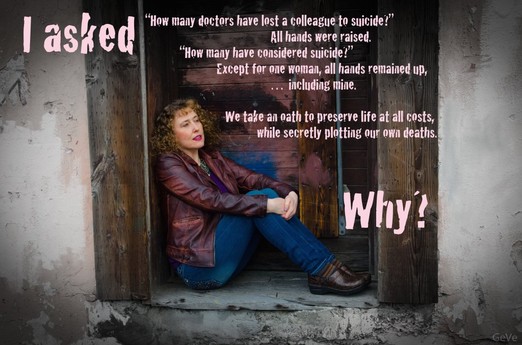
In follow up to the previous post on physician suicide, Dr. Pamela Wible, moved by the fact that most physicians have lost a colleague to suicide or have considered suicide themselves, asked med students, residents and doctors about their own mental health and why they thought doctors turned to suicide.

The letters and comments she received were both moving and powerful, and most importantly they serve as a chilling reminder that we need to give more attention to the physical and emotional well-being of medical students and doctors, in addition to providing better supports and mental health services for those in the medical profession.

While all the letters can be found at KevinMD.com, below is just one example to think about ...

“I am a third-year medical student. I have done very well in both my coursework and national boards. I have publications, research. On paper, I am successful. Yet I find myself thinking about killing myself frequently. Walking into traffic, jumping through the window, just dying in the course of a normal day. Miserable thoughts. I went to the school psychologist to be fixed; I was referred to the school psychiatrist, who looked just as broken as I felt. He offered me antidepressants, if I ‘wanted to take them.’ It doesn’t make sense. I never felt this way before medical school. I loved, I thought, I reflected. I enjoyed being creative, yet now I’m chained by procedure, bureaucracy, and paperwork. There are no creative solutions to problems, there is no effective effort to improve the system except from big top-down initiatives of whatever hierarchy you’re subject to. It’s maddening. I used to watch the stars and smile. I volunteered. I ate well and exercised. I enjoyed playing with children. Now I’m finding a sort of perverse pleasure in patients’ pain; I recognize this as sadistic. I’m shocked. I’m revolted at how far my soul has degraded. It’s insane. I’m chronically sleep deprived. I can’t think or learn when I don’t sleep. I can’t smile without ulterior motive. I’ve confided in my family, who don’t understand the demands or the situation and have told me that ‘it’s my decision to feel sad.’ The [professors] don’t teach; half of them treat us as annoyances. Learning and healing both got lost somewhere. The good teachers leave or are ground down. I’m full of hate and sadness. I’m not sure why I’m still here, but I am. I feel like an echo of myself.”

1 Comment
<<Previous
Forward>>

    Description

    Supporting and enhancing students' and health professionals' knowledge and understanding of mental health and psychiatry

    Archives

    June 2017
    May 2017
    April 2017
    March 2017
    February 2017
    January 2017
    December 2016
    November 2016
    October 2016
    September 2016
    August 2016
    July 2016
    May 2016
    April 2016
    March 2016
    February 2016
    January 2016
    December 2015
    November 2015
    October 2015
    September 2015
    August 2015
    July 2015
    June 2015
    May 2015
    April 2015
    March 2015
    February 2015
    January 2015
    December 2014
    November 2014
    October 2014
    September 2014
    August 2014
    July 2014
    June 2014
    May 2014
    April 2014
    March 2014
    February 2014
    January 2014

    Categories

    All
    Aboriginal Mental Health
    Abuse
    Addiction
    ADHD
    Advocacy
    Agitation
    Alcohol
    Alcohol Withdrawal
    All
    Alzheimer's Disease
    Animals
    Antipsychotic
    Anxiety
    App
    Art
    Autism Spectrum
    Awareness
    Barriers To Care
    Bereavement
    BIID
    Bipolar
    Books
    Borderline
    BPSD
    Caregivers
    Catatonia
    CBT
    Child Psychiatry
    Complicated Grief
    Concussion
    CPA
    Cultural Psychiatry
    Delirium
    Dementia
    Depression
    Dermatillomania
    Diagnosis
    Documentary
    DSM 5
    Dual Diagnosis
    Eating Disorders
    ECT
    Education
    Educational Resource
    Epilepsy
    Ethics
    Exercise
    Factitious Disorder
    Film
    Food
    Forensic Psychiatry
    Gambling
    Gaming Addiction
    Gender Dysphoria
    Geriatric Psychiatry
    Global Mental Health
    Harm Reduction
    Heart Attack
    Hoarding Disorder
    Humanities
    Infographic
    Initiatives
    IPad
    Language
    Law
    LGBTQ
    Loneliness
    Malingering
    Mania
    Medication
    Meditation
    Mens Mental Health
    Mental Health
    Mental Health Law
    Mental Status Exam
    Military
    Mind-body Wellness
    Mindfulness
    Mood Disorder
    Music
    Neurodevelopmental
    Neuropsychiatry
    News
    Ocd
    Panic Disorder
    Parksinson's Disease
    Patient Perspective
    PDD
    Personality Disorders
    Phobia
    Physical Health
    Physician Suicide
    Physician Wellness
    Poems
    Pop Culture
    Postpartum
    PPD
    Prevention
    Psych Assessment
    Psychiatry
    Psychoanalysis
    Psychosis
    Psychotherapy
    Ptsd
    Recovery
    Refugee Mental Health
    Relationships
    Reproductive Mental Health
    Research
    Resiliency
    Safety
    Schizoaffective Disorder
    Schizophrenia
    Screening
    Seasonal-affective-disorder
    Selective Mutism
    Self Harm
    Self-harm
    Ses
    Sexual Disorders
    Sleep Disorder
    Social Anxiety
    Social Isolation
    Social Media
    Somatic Symptoms And Disorders
    Sports
    Stigma
    Stress
    Stress Injury
    Student Mental Health
    Substance Use
    Suicide
    Surgery
    Technology
    TED
    Therapy
    Tools
    Transgender Mental Health
    Treatment
    Trichotillomania
    Womens Mental Health
    Youth

    RSS Feed

Powered by Create your own unique website with customizable templates.